

📩 Pulse Points #84: Qualcomm's MWC reset, Oura’s gesture play, and 11 more updates
Catch up on the world of wearable tech's key stories from this week


Bang, Pulse Points returns. After a mini hiatus—while yours truly was somewhere over the Atlantic Ocean, journeying from Samsung’s Galaxy Unpacked to MWC 2026—I’m back to round up all the biggest news in the industry from this week.
Premium subscribers can read my full takeaways from both of those major events in the tech calendar. Spoiler alert: it includes very few original thoughts regarding those attention-seeking, moonwalking robots in the halls of the Fira de Barcelona, but does have plenty of commentary on big-picture trends in AI hardware. That’s what we’re all here for, after all.
And, speaking of: a shout-out to the glut of new subscribers over the last few weeks from the likes of Google, Samsung, Garmin, and those of you involved in research at academic institutions. It’s great to have you on the winning team.
Let’s get into this week’s news updates.
Consumer Launches & Updates 🛍️
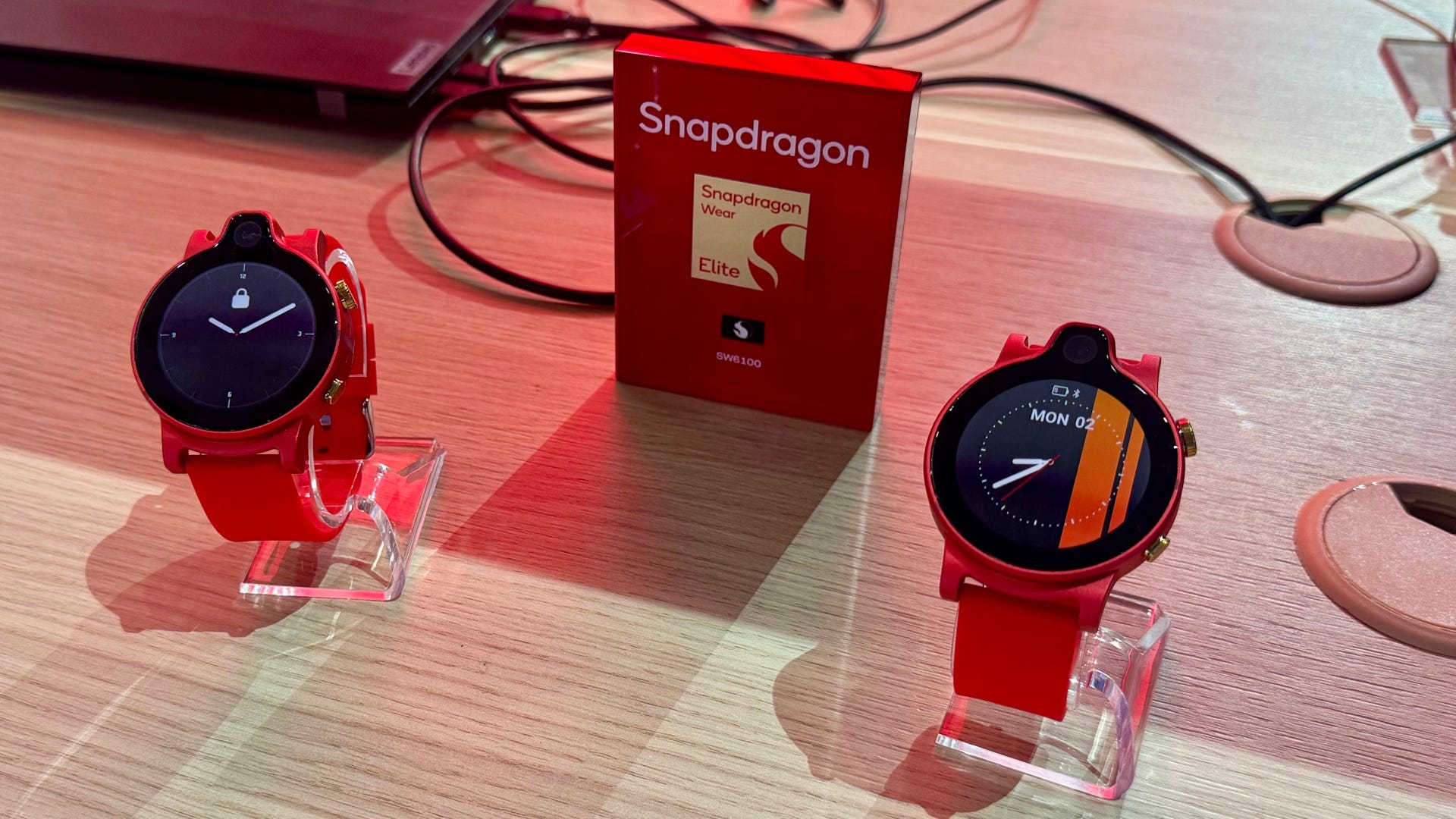
Qualcomm’s Snapdragon Wear Elite arrives to power next-gen AI hardware
Qualcomm’s frankly unexpected delivery of the all-new Snapdragon Wear Elite platform was arguably the most important announcement of MWC. The chip maker has essentially hit the reset button on its wearable architecture, moving to a 3nm process and introducing a dedicated NPU (Neural Processing Unit) to the wrist.
It’s a foundational shift for a platform that has previously been very smartwatch-led; by enabling billion-parameter AI models to run on-device, this chip is designed to power what Qualcomm calls the ‘Ecosystem of You’—taking AI off your phone and putting it into watches, pins, and pendants.
With a promised 5x jump in CPU performance and 30% better battery efficiency, this silicon is set to define flagship wearables for the next couple of years. Read more >
Xiaomi Watch 5 goes global at MWC
Xiaomi hasn’t brought a Wear OS watch to the global market since the Watch 2 series, making the Watch 5 a welcome return to the Google ecosystem.
Running Wear OS 6, the hardware highlight is a massive 930mAh silicon-carbon battery that Xiaomi claims can stretch to 18 days in power-saver mode—a direct challenge to the stamina limits of the Pixel and Galaxy watches.
It also introduces EMG gesture controls, which use electrical signals from your wrist to let you trigger Gemini with a simple snap of your fingers, offering a glimpse of a future where we interact with our watches without ever touching the glass. Read more >
RayNeo Air 4 Pro lands in Barcelona (with a Batman Edition)
After releasing the standard Air 4 in China late last year, RayNeo’s stand in Barcelona was a constant hive of activity thanks to the just-released Air 4 Pro.
Like the brand's previous products, this is another wearable 200-inch display for your face. And, in a fun twist, there was also a Batman Edition (which we didn’t actually see on the floor, but is pictured above). In my very brief hands-on time, the 4 Pro proved low-latency, offered crisp visuals, and was very lightweight (it weighs just 76g, which is equivalent to a chunky Garmin Fenix 8 Pro). Read more >
Moto Buds 2 Plus take on Galaxy Buds 4 Pro with AI features
Slightly less fun, this one, but Motorola did use the conference to unveil the Moto Buds 2 Plus, featuring ‘Sound by Bose’ and CrystalTalk AI, which uses deep learning to aggressively filter background noise during calls.
At a sub-$200 price point, the inclusion of AI live translation and automatic wear detection makes them a strong contender for the mid-range Android market. Read more >
Industry Updates 📊

Oura acquires Doublepoint for gesture recognition
In its fourth strategic acquisition to date, Oura has snapped up Helsinki-based Doublepoint, a move that hints at a massive shift in how we may interact with future versions of the brand’s smart rings. Doublepoint specializes in AI-driven biometric gesture recognition, enabling devices to interpret subtle, natural hand movements.
Oura says it believes the next phase of wearable AI will be powered by a combination of voice and gestures, and this acquisition brings a world-class team of AI architects to the table. For Oura—recently valued at $11 billion—this is about building toward the capability to control our ambient environments without needing a phone screen. Read more >
Eight Sleep Raises $50M for ‘predictive health’
Eight Sleep has closed a strategic round led by Tether Investments, valuing the startup at $1.5 billion as it looks to move beyond sleep optimization. Armed with over one billion hours of data, the company plans to use the capital to enter “every dimension of personal health” through predictive AI.
The funding also marks Tether’s first foray into wellness, with plans to integrate their QVAC private health architecture—an on-device AI system that helps users manage bio-health data locally, ensuring that Eight Sleep’s push into clinical-grade monitoring remains privacy-first. Read more >
Pixel Watch’s March update brings gestures for all
Google is expanding the gesture fun of the Pixel Watch 4 to the Pixel Watch 3. Users can now use double-pinch gestures or turn their wrist to answer calls, snap photos, or pause music—a huge win for accessibility and usability when your hands are full.
The update also adds Express Pay, allowing for tap-to-pay functionality without opening the Google Wallet app first, and standalone earthquake alerts, which can provide life-saving seconds of warning directly on the wrist. Read more >
Rokid Glasses get native Gemini support
Rokid has become the first smart eyewear manufacturer to natively support Google’s Gemini directly on its device. The new software update creates a unified platform that lets users toggle between Gemini, ChatGPT, DeepSeek, and Qwen, effectively allowing them to choose their preferred AI assistant for multi-modal interactions.
This device-to-cloud architecture allows for low-latency real-time translation and localized AI experiences, helping Rokid maintain its position as a global leader in the AI glasses category. Read more >
Outdoor watch challenger brand Mibro expands to the US market
Chinese wearable maker Mibro is officially launching in the States with the Explorer S and GS Pro 2. Known in Europe for its work with professional padel and sports clubs, Mibro’s tech specializes in AI-driven analysis—for example, recognizing six distinct racquet strokes with over 90% accuracy.
Its key releases so far are the Explorer S—a rugged outdoor specialist with 10 military-grade durability certifications—and the GS Pro 2, which targets triathletes with a 20-day battery life. It should bring more competitive mid-range options to the American market, which is often left short due to trade restrictions. Read more >
Rumors & Whispers 🕵️♂️
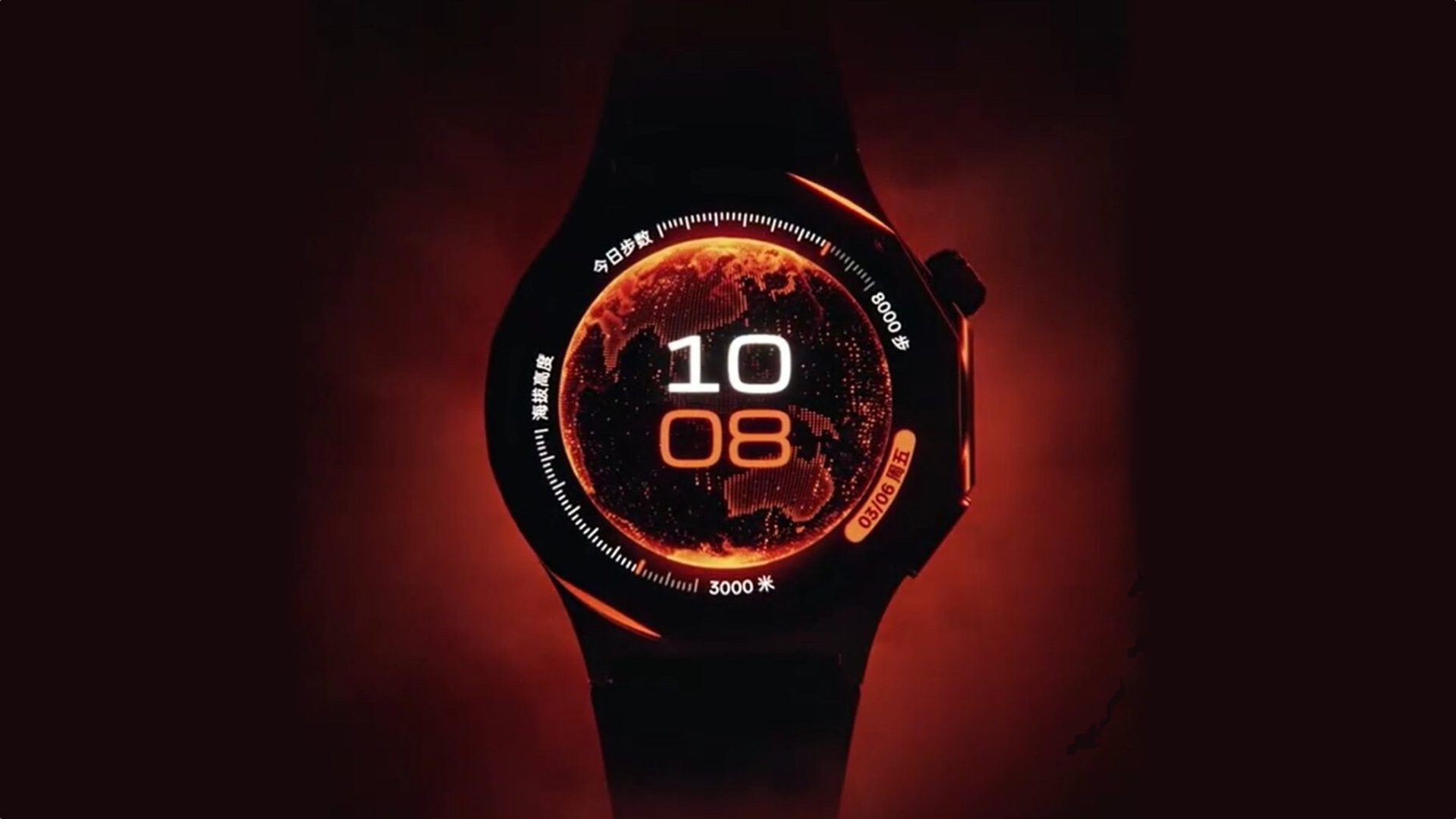
Huawei Fit 5 ‘Ultra’ & Watch D3 may be announced next month
Leaks suggest Huawei is prepping an April launch for the Watch FIT 5 series, which is rumored to include a brand-new “Ultra” variant for the first time. Simultaneously, whispers about a next-gen Watch D (presumably the D3) suggest Huawei has made massive breakthroughs in blood-glucose monitoring accuracy. The new medical-grade wearable is expected to go official in Q2 2026, featuring an enhanced TruSense system that combines mechanical airbags with micro air pumps for more granular health reporting. Read more >
Samsung planning dual-chip strategy for next-gen smartwatches
After reports from the MWC show floor confirmed that Samsung would be the first proponents of the Snapdragon Wear Elite platform, a rumor later suggested the brand may split the brains of its upcoming summer lineup.
The Galaxy Watch Ultra 2 is reportedly set to feature the new Snapdragon Wear Elite to maximize its personal AI capabilities, while the standard Galaxy Watch 9 may stick with the in-house Exynos W1000. Read more >
Meta reportedly testing AI shopping tool internally
Meta is reportedly testing a ‘shopping research’ tool in the US that allows its Meta AI to surface product carousels with pricing and merchant links directly in the prompt box. The tool reportedly doesn’t complete purchases inside Meta AI, but instead directs users to external sites for checkout. So, more product discovery than simplifying the actual purchasing experience, potentially. Read more >
Oppo Watch X3 teasers begin—is a Wear OS edition coming next?
Oppo has begun teasing the next-gen Watch X3 in China. Featuring premium-looking housing and a rotating crown, previous launch cycles suggest the X3 has a decent chance of getting a global release running Wear OS, positioning it as a premium alternative to the Google and Samsung ecosystems.
However, we still don’t know much about the actual hardware specs… or anything, really. So, this also may just end up reappearing rebadged as the OnePlus Watch 4. Who knows? Watch the teaser here >